

Dependence Demystified.
We will get to know the people or events that caused the initial family trauma and change your relationship with them, until they become people again.
My Story
When I was growing up in the 1960s, I had never heard of the words ‘alcohol dependent’. Addiction wasn’t a word that was well-known in New Zealand at the time. It was a peaceful life for most: Men worked at their jobs, while women stayed home to have babies, look after their little ones, keep the house clean and feed the family. After work, men would stop for a beer at the local pub before going home to the little woman and the kids. On Saturdays there would be rugby, racing and beer. On Sundays, there would be either hangovers or church, or often both. Men were men, women were women, and children were silent witnesses.
During the Christmas holidays, bored children would congregate at the school grounds to play, or go hang out at the school pool to enjoy the warm summer days. The lucky ones would go away camping for weeks at a time. But I didn’t do any of these things. All I knew was that life was scary most of the time. I was usually hungry, and I didn’t know basic hygiene. I was sad and lonely and different. I didn’t have friends, and I kept to myself and read a lot. I felt so different, like everyone else knew something that I didn’t. I knew that sometimes Mum was very, very happy, but sometimes fights broke out. When the fights started, my brothers and sister and I would go and hide. It took me a long time to be able to tolerate loud voices. Sometimes we had food, and sometimes we didn’t. Sometimes Mum was at home, and sometimes she wasn’t. There would be a new man in our house, and then suddenly he’d be gone again. Or we would have to leave because of the shouting and bruises. Now, as an adult, I know that my home life was the same as that of millions of other children, but we were ashamed. We hid the shame and still do, by trying hard to be like everyone else.
I now somewhat understand how Mum’s drinking affected me. Life revolves around the person who has the dependency. Their life revolves around their dependency. As their relationship with their substance grows, all other relationships shrink. There is no room for children. And so the intergenerational trauma continues.
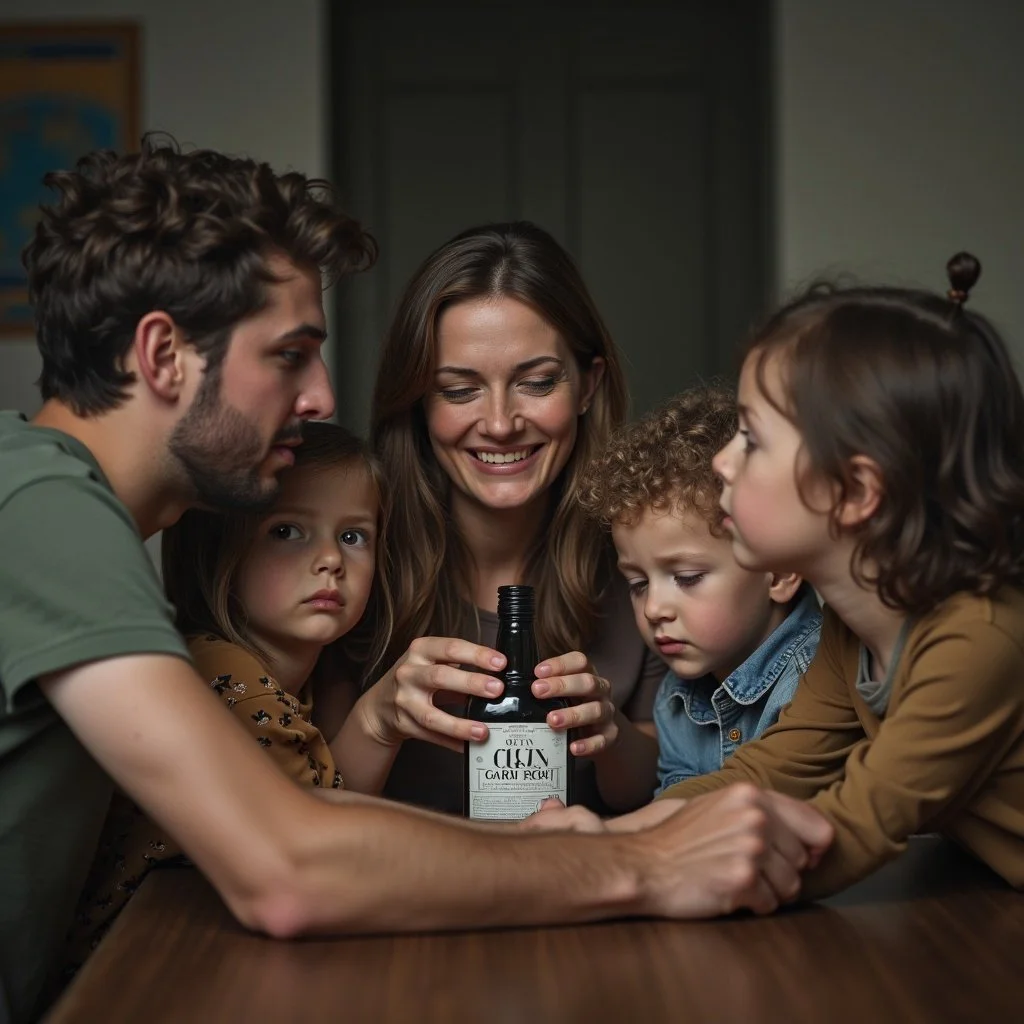
A family gathers - the addict around the bottle, the codependent one looking after them and the children have no place
Educational Insight - the need for connection
In recent years, there has been a shift away from the idea of people who have a substance dependency as being weak and deficient in some way; deserving punishment for their deficiency. It’s taken 100 years of making drugs illegal and punishing those with substance dependencies to discover that this won’t stop them from abusing their substance of choice. The same is true for those struggling with compulsive behaviours like gambling or shopping - criminalisation and punishment do little to address the underlying dependency.
One way of thinking about this is that people who have dependencies are opting out, because they cannot cope with their pain. This is simplified of course, because there are many factors that ‘cause’ substance use disorders. Please note that this quote was written before we changed the terminology from addicted and addiction to what we use now. Katie McBride writes:
“Certain people are more vulnerable to addiction than others; many people can use any array of drug without becoming addicted. But although addiction experts disagree slightly about where certain drugs should be on a spectrum of most to least addictive, almost all agree that there is indeed a spectrum. It would be wilfully ignorant to say that a person is equally likely to become addicted to cannabis as they are to oxycontin or fentanyl. Of course the drug in question matters. So do a plethora of other factors. In reality, there are many factors that lead to addiction, including environment, stress, genetics, life-circumstances, and adverse childhood experiences (ACEs). It is not uncommon for people with addictions to have any combination of the above factors, nor is it an exhaustive list. These factors also have different effects on different individuals. For example, people who suffer from a mental illness are twice as likely to struggle with addiction.”
Professor Peter Cohen agrees with the connection theory. He calls an addiction a ‘bond’. We have an imperative to bond with something. We all need to connect with something, otherwise we are adrift. Bonding to one thing at the expense of everything else is a problem. We need balance in our lives to be whole. We need to look after the physical as well as the spiritual, mental, and emotional. We all know people who have bonded with a sport, food, a person, exercise, sex or a hobby. It’s like they become obsessed or possessed. It’s all they talk about, all they do. They tie their identity to it. They call themselves the name of whatever it is they have bonded with, like yogi or climber. Unless it is socially unacceptable. It’s okay to be an athlete, but not okay to be an alcoholic.
Alcohol is an easy addiction to fall into; partly because it is cheap, easy to get hold of, and when taken in moderation, socially acceptable. It’s an easy way for a person in a shitty cage to escape that cage. And once a person has formed a strong bond to alcohol, they do not bond well with others. On average, people who abuse alcohol or any other substances affect up to 20 people per person in their lives, including workmates, friends and family. Including you.
Breaking the bond with a substance is as hard as breaking a bond with anything else. Remember your first breakup? The world ended. You thought you would never be happy again. Maybe you took to your bed for days. Until one day, said ‘no more’, and you started living again. Or remember after your dog died? You still saw that dog everywhere; heard his paws on the floor. You even caught yourself thinking about having to take him for a walk. People were sympathetic; you may have had a funeral or marked the breaking of the bond in some other way.
Getting over a broken bond is easier if you have support. Without support, it’s hard, almost impossible, to recover. Maia Szalavitz, author of Unbroken Brain, agrees:
“People are actually more likely to recover when they still have jobs, family, and greater ties to mainstream society, not less. Indeed, the more “social capital” someone has, friends, education, employment, job contacts, and other knowledge that promotes links to the conventional world, the more likely recovery is. As soon as you think about it critically, it’s easy to see why if you had to bet on whether a homeless, unemployed person or a successful physician is more likely to recover, your money would be safer on the doctor than on the guy on skid row. ”
If we look at the problem of addiction as a bonding problem, we begin to gain insight into our upbringings. This is not an excuse for our loved ones’ behaviour, but it can help us to understand those who hurt you. Take note that this is not about forgiveness, but understanding. One of the simplest and hardest ways of healing deep wounds is to understand the person that hurt you. I’d like to qualify this by saying that you are NOT to put yourself in harm’s way. You are not letting them off the hook. You do not need to swallow the hurts and pretend they didn’t happen. Someone hurt you. End of story. I’m also NOT saying that you need to agree with anything that they did or said. You may come to realise that what happened actually had nothing to do with you. Or you may realise that they hurt you on purpose. That’s their stuff, not yours.
There is only one way to understand the ones who hurt you. Get to know them. This is your first action on the quest for knowledge. Your loved one may be a shadowy figure in your life; you may not actually know much about them. You may know some objective facts, like where and when they were born, where they fit in the family, what their dad did for a job. But you may not know much about them as an actual person, what is their favourite ice-cream flavour, and why? Who is their favourite author and why? What was the name of their first crush? What was their favourite job? What was their family like? It’s so important to see them as actual people, not simply Mum or Dad. They are people first.
My Story
I had this kind of breakthrough with my own Mum (unfortunately about five years after she died, isn’t that ironic?) I realised one day in therapy what it must have been like for her to raise three children under five years of age. It was the 60s, she was a single mother and had been traumatised by her own Mother’s substance abuse. Times were tough. She had to depend on shady men for support, because who else would take her on with three little kids? This realisation helped me put things into perspective. She was just trying to get by. She was doing her best with the tools she had. She wasn’t trying to make my life hell and mess me up, that was just an unhappy by-product. She had had her own trauma from her mother in her childhood.
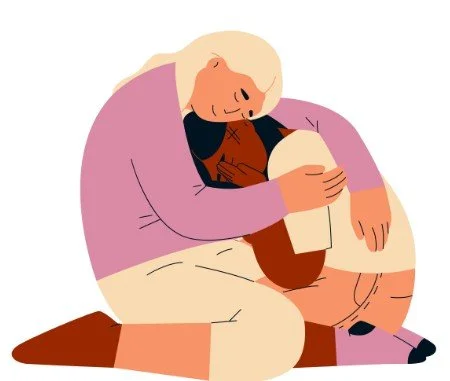
Reflective Discovery - Beyond the Hurt: Seeing the whole person
Please know that you can skip this action if you want to. If it causes anxiety or flashbacks, or any other extreme symptoms of trauma please stop now. You can come back to it another day, or not, whatever is best for your mental health. You do not have to do anything you don't want to. If you feel up to it, this could be a powerful exercise that is freeing.
The worksheets in your book give you an opportunity to be a detective. Your action is to discover more about the person in your life that hurt them so badly while you were growing up. If it is a parent, this will help to see them as an actual person, not just Mum or Dad. If it is not a parent, I encourage you to do it anyway, with whatever information you have. Do this when and as you are able. If you can’t get some of the information, that’s ok. There is plenty of information available on the internet about what the world was like for them at various stages of their lives. You are information gathering at this stage. I encourage you to get as much information as you can. It’s important that you get a handle of what life was like for them. You must do this before moving on to the next action. You are going to use the information they gather to create the Healing Mantra, the words to enable them to let go. If you are not ready to do this, you don’t have to do it. You can come back to it when they are ready.
If you still have contact with this person, you are probably stuck in a dance of behaving in certain ways with each other. This doesn’t mean you have to keep doing this dance, you can change things at any time. You might feel powerless and hopeless, but you aren’t.
You can’t change the past. You can’t change how this person acts now. You can only change yourself. You do this by knowing yourself, and taking care of yourself. You do this by reacting to situations in a different way. By creating the healing mantra you will learn in this workshops and make it a part of your life.
Things can change. You can let go of your past hurts today. You can let go of unrealistic expectations today. You can let go of the hurt of unmet needs today. Your feelings of not being good enough can end today. It sounds simplistic and too good to be true. Yes, it’s going to be a long slow wade through the mud to get to the other side. Remember: How do you eat an elephant? One bite at a time.
Now I encourage you to complete the worksheets in your workbook, pertaining to this workshop. Researching the person with the dependencies will give you insight into their life. Their cherished hopes and dreams, and also their disappointments and fears. You are not to worry too much if you can’t answer every question, but try your hardest. These questions are just to get you started, I’m sure you can think of many more.
Questions from the workbook
What was it like for them living with their parents? Did they move around a lot? Were times hard? Were they immigrants? Were they refugees? Were they a close family? Were there many children in their family?
Think about their fashions, food choices, transportation, and surroundings. I’m sure you can think of more. What was the political climate like? What music was popular? What was life like for women? Or men? Did they live in a rural or urban environment? Did they have siblings? Where were they placed in the family? Were they a close family? Were they healthy or sick? Was there enough money to go around, or did they struggle?
What were your parents like as you were growing up? Were they lenient? Were they overprotective? Did they expect too much? Or too little?
What were your parents like as a teen? Hardworking? Irresponsible? Thoughtful? Selfish? Did they have a job? Did they make friends easily? What education did they have? What was the education system like at the time?
What was life like for them when you were born? Where do you fit in the family? Did Mum or Dad have to give up work or leave school to take care of you? Were your parents married, divorced, or in a relationship? Was your birth easy? What was the health system like? What was the parenting flavour of the times?
What was the world like when you were growing up? What was the political climate like? What was the health system and education system like? Did you live in a rural or urban area? Why? Did Mum work outside the home? Why? What was it like for women at the time? Did Dad have much to do with parenting?
What do they like? What do they dislike? What is their favourite (anything) and why? What do they try to avoid and why? What is their favourite way of passing the time and why? What about travel? Anywhere they would particularly like to go? Why? What are their expectations of themselves and why? Are they generally happy? Why or why not? Remember we are not analysing them, we are getting to know them. We are all adults now.
What are two surprising things you have learned about them?
How have your feelings towards the one who hurt you changed while completing these worksheets? How do you feel about them now?
You are now well on the way to completing your first element in the workbook.
Healing Intervention
The ceremony that follows is a simple yet powerful healing mantra into action. It is best to use this ceremony to counter deep hurts. We are going to bring out the ‘exile’, the little one who is excluded from waking thought as it’s too painful for them to be there.
To conduct this ceremony, start by thinking of one event that happened to you involving the person who hurt you. The event that you think of first is the one that had the biggest impact on you. It’s not effective to do a general “My life has been shit and it’s your fault Mum.” You need to be specific, so think about a specific time when someone did something that hurt you. For example, for me that would be the time I fell off my uncle’s bike and badly hurt my leg. I had to look after it myself because no-one was there to do it. They were drunk. I was 6.
We want to comfort the little one who experienced trauma focusing on creating a safe, nurturing, and validating environment.
We are going to provide reassurance, safety, and acknowledgment of the pain experienced by the exile while fostering a sense of healing and connection.
-
Create a calming space with soft lighting and soothing music.
Have a comforting object ready for the little exile to hold (like a blanket or stuffed toy).
Have a journal or drawing materials ready for reflection afterward.
-
Begin with deep breathing exercises or grounding techniques to create a sense of calm. For example:
Imagine roots growing from your feet into the ground (grounding visualisation).
Use belly breathing to relax your body.
-
Visualise yourself as you are now meeting your younger self at the age when the trauma occurred.
Approach gently and introduce yourself as someone who cares deeply for the little one.
You can use simple, reassuring words like: “I’m here now. You’re safe with me.”
-
Acknowledge your little one’s feelings without judgment: “I know you felt scared/lonely/hurt. It’s okay to feel that way.”
You can reassure the little one that the traumatic event was not their fault.
-
If you are comfortable with this, imagine holding the little one’s hand, giving them a hug, or sitting beside them if they’re comfortable.
You can provide soothing words: “You’re not alone anymore. I’m here to protect you.”
-
Offer the little one the comforting object that represents care.
Encourage the little one to express their feelings through play, drawing, or storytelling if they wish.
-
You can end by reassuring the little one again: “You are loved, and you are safe now.”
You can let the little one know they can always call on you when they feel scared.
-
After the visualisation, journal your experience or draw what you felt during the ceremony.
Reflect on any emotions that arose and how you can continue to nurture this part of yourself.
“You may feel drained and shaky. Now is the time to be kind to yourself. Make a cup of tea, watch a movie, go for a walk or have a bubble bath. Do whatever it is you do to relax. It’s normal to feel exhausted after a big emotional experience and it’s ok to look after yourself. You might even feel buzzed and want to tell the world what happened; it’s ok to do that too. Be kind to yourself. Things are changing and recovery is hard, tiring work. ”