

Recovery Goals
You will get to know what the way forward is for your recovery with goal setting, using this framework that celebrates the little wins.
Recovery Goals
We need goals in our lives to give us purpose and direction. Goals can be large or small. They can be long-term or short-term. A short-term goal might be to finish this book. A long-term goal could be finishing a degree course. Ideally, short-term goals should help your clients achieve their long-term goals.
Goals give us something to move towards, a reason to get up in the morning, and a sense that our lives are going somewhere meaningful. Without goals, we can feel adrift, as though we're simply reacting to whatever life throws at us rather than actively shaping our own path. For people who have experienced trauma, particularly those who have spent years adapting to others' needs or living in survival mode, the idea of having personal goals can feel foreign or even selfish. But goals are actually a vital part of recovery. They help us reclaim our sense of agency and remind us that our wants and needs matter.
I must admit, I don't like goals, because I'm so harsh on myself that when I don't achieve them, I am ashamed. As a result I have very few short-term goals. I do have one vague long-term goal. This means I have done a lot of drifting around in my life. Now, as I am undoing the trauma effects and practising a new way of being, I find that I want to set goals for myself.
This change didn't happen overnight. For years, the mere thought of setting a goal would fill me with anxiety. What if I failed? What if I let myself down again? The shame of not achieving something felt worse than not trying at all. But as I've worked through my own trauma, I've realised that this harsh inner voice was never mine to begin with. It was the voice of people who didn't see my worth, and I internalised it. Now I'm learning to set goals with kindness rather than criticism, and that changes everything.

You can use this time to set new goals too. If you are a Hero, you can set a goal of looking after yourself first, even though it's hard. If you are a Lost Child, you can set a goal of connecting with others even though it's uncomfortable. If you are a Mascot, you can set a goal of being serious when you want to make a joke because you are uncomfortable. If you are the Acting-Out Child, you can make a goal of staying instead of flouncing out.
The key here is that these goals are about breaking old patterns, not about being perfect. If you're a Hero, you don't need to become completely self-focused overnight. You might start by simply noticing when you're sacrificing your own needs, or by taking five minutes for yourself each day. If you're a Lost Child, you don't need to suddenly become the life of the party. You might begin by making eye contact with one person at the supermarket, or sending a text message to an old friend. Small steps are still steps, and when you've been stuck in trauma patterns for years, even the smallest shift can feel monumental.
The goals we set during recovery are different from the goals we might have set before. They're not about achievement for achievement's sake, or about proving our worth to others. They're about reclaiming parts of ourselves that we've had to hide or suppress. They're about practising new ways of being in the world, even when those ways feel awkward or uncomfortable at first.
I'm a Mascot and I am breaking the Mascot trauma effects. I would like to strengthen the progressive roles that are inside myself and use them when appropriate. This is my long-term goal and it's inspiring to see it written down. When I see it in writing, it becomes something that I could actually do!
There's real power in naming what we want. For so long, my automatic response to discomfort was to make a joke, to deflect, to keep things light. It kept me safe, but it also kept me hidden. Now I want the freedom to choose. I want to be able to use humour when it genuinely serves me, and to be serious when that's what's needed. I want to access my Hero energy when someone needs help, my Lost Child stillness when I need to reflect, and yes, even my Acting-Out Child anger when I need to set a boundary. Writing this down makes it real. It transforms a vague wish into an intention, something I can actually work towards.
To achieve long-term goals, we have to set short-term goals. Long-term goals can feel overwhelming, especially when you're already dealing with the daily challenges of trauma recovery. Breaking them down into manageable pieces makes them less daunting and gives you regular opportunities to experience success. Each small achievement builds your confidence and reminds you that change is possible. I start by asking myself the following questions:
How am I going to do this? This is about getting specific. Instead of saying "I want to be more serious," I might say "When I notice myself wanting to make a joke because I'm uncomfortable, I'm going to pause, take a breath, and choose whether humour is actually what I want in this moment." The more concrete your plan, the easier it is to follow through.
How long is it going to take? Some goals are ongoing, and that's okay. Recovery isn't a destination, it's a practice. But it can help to set realistic timeframes for checking in with yourself. Maybe you'll assess your progress in three months, or six months. This gives you something to aim for without putting unrealistic pressure on yourself to change overnight.
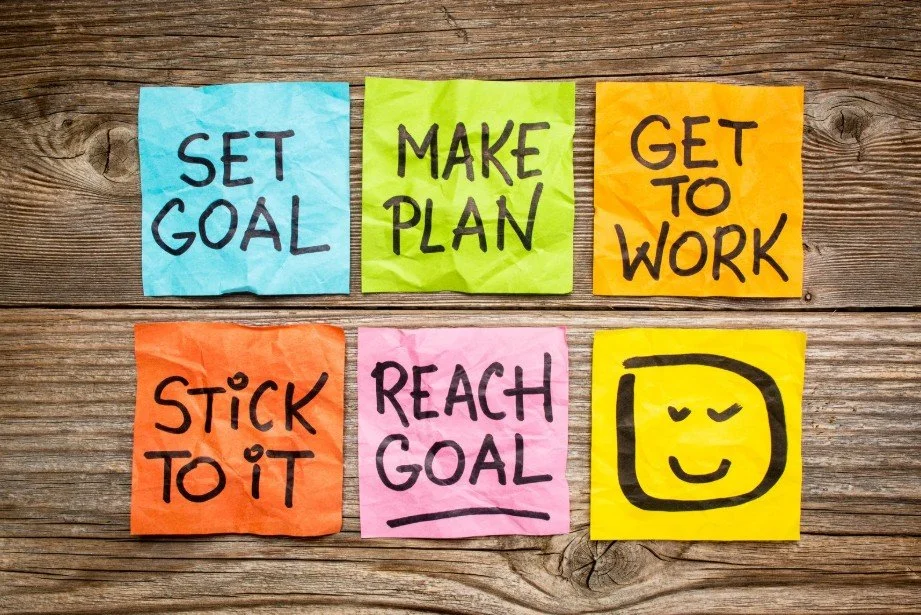
How am I going to remember that I have this goal? Life gets busy, and old patterns are deeply ingrained. We need reminders. Some people set phone alerts, others write their goals on sticky notes, others create visual reminders or tell a trusted friend who can gently check in with them. Find what works for you.
Who can help me stay on track with this? Recovery doesn't happen in isolation. Having someone who understands what you're working towards and can offer gentle accountability can make all the difference. This might be a therapist, a trusted friend, a support group, or even an online community. Choose someone who will encourage without criticising, and who understands that setbacks are part of the process.
How will I celebrate when I achieve it? This is crucial, especially if you aren't used to acknowledging your own successes. Celebration doesn't have to be grand. It might be as simple as acknowledging to yourself "I did that difficult thing," or treating yourself to something you enjoy, or sharing your success with someone who will genuinely celebrate with you. These moments of acknowledgment help rewire your brain to associate effort with positive outcomes rather than shame.
How will I keep on going even when it seems hopeless? Because there will be moments when it does seem hopeless. Old patterns will reassert themselves. You'll slip back into familiar roles. The key is to expect this and have a plan for it. What will you tell yourself when you fall back into old patterns? How will you be kind to yourself when progress feels slow? Who can you reach out to when you need encouragement? Remember that setbacks aren't failures. They're information about what's hard and where you need more support.
Reflective Discovery - Set Goals
It’s easy to become overwhelmed by goals. This is the effects of trauma talking. One way to silence that spiteful voice is for you to set one goal at a time until you are comfortable. Then make another one and finish it. Then another. You are in this for the long haul. You can do it. Call on your inner strength.
Use the worksheet to expand on your long-term goals and establish some actionable short-term goals. Keep your values in mind when you set these goals.
Continue with the steps outlined on the worksheet:
How am I going to do this?
How long is it going to take?
How am I going to remember that I have this goal?
Who can help me stay on track with this?
How will I celebrate when I achieve it?
How will I keep on going even when it seems hopeless?

Healing Intervention
-
This exercise can serve as a gentle yet powerful way to help you transition from the intensity of the session into a state of relaxation and emotional balance. It focuses on connecting with the breath, grounding in the present moment, and fostering a sense of safety and empowerment.
-
Begin by dimming the lights or creating a calm atmosphere with soft music or silence.
Sit comfortably, with your feet firmly planted on the ground or legs crossed.
-
Use this simple breathing technique to ground yourself:
- Inhale deeply through your nose for a count of four.
- Hold your breath for a count of four.
- Exhale slowly through your mouth for a count of four.
- Pause for four counts before repeating.
Repeat this cycle for several minutes, encouraging focusing on the sensation of your breath and letting go of tension.
-
Visualise your goals as seeds planted within you during the session. The seeds are growing stronger with each breath.
Say to yourself the following gentle affirmations if they resonate with you:
- “With each breath, I am reclaiming my strength.”
- “I am safe, grounded, and connected to my goals.”
-
After completing several rounds of breathing, allow a few moments of silence to reflect on what you’ve learned or experienced during the session.
-
As we close today’s session, carry this sense of calm and connection with you. Your goals are your guiding light - trust yourself as you move forward.